
François Chicoine, real estate brokers for multiple units in Montreal
Buying and selling real estate for non-residents of Canada
Buying as a Canadian non-resident, yes it’s possible!
Investing in real estate in the province of Quebec, yes it’s possible!
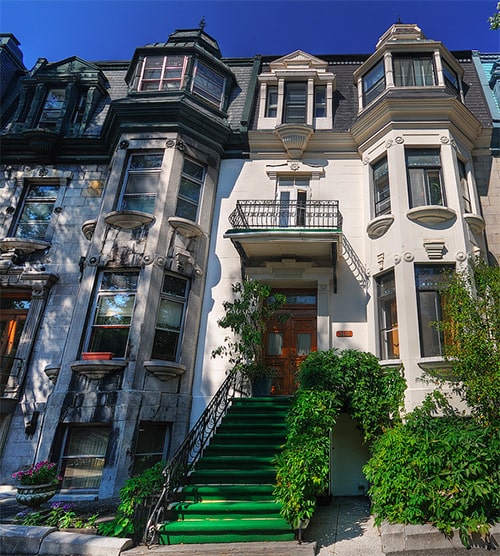
It’s no longer a secret: real estate investments on the island of Montreal are a good deal for Canadian non-residents. This applies to condos as well as other types of housing. People from France, the United States and now Asia are investing in Montreal.
However, there are several things that a foreign buyer or seller needs to know when buying or selling a property. In Canada, the rules for real estate transactions sometimes differ from one province to another and offer certain advantages for non-Canadians wishing to invest.
In Montreal, for example, there is no tax imposed on foreign buyers, unlike Vancouver at 20% and Toronto at 15%.
Moratorium – Ban on the purchase of residential property by non-Canadians
The moratorium has been extended until January 1, 2027. People who are not Canadian citizens or permanent residents will not be able to buy property in Canada.
The law applies to individuals as well as corporations and other legal entities.
The ban applies to the following types of property:
- single-family home
- divided and undivided condo
- duplex, triplex
Exceptions to the law:
- Holders of a temporary work permit
- If your spouse is a permanent resident
- International students meeting certain criteria
Not covered by the law:
- commercial or semi-commercial building
- rental building with more than three units (4-plex and up) *** Contact me to discuss.
Advantages of investing in Quebec real estate for foreigners
- Quality of life: Montreal ranks first among fifteen major North American cities for quality of life, notably thanks to its low crime rate.
- 1st French-speaking city in the Americas
- 2nd economic centre in Canada
- University city: 4 universities, 2 French-speaking and 2 English-speaking
- Low unemployment rate: 3.6%
- Affordable properties: half the price of Toronto and Vancouver
- Properties are easy to buy and sell.
- Low interest rate on fixed-rate mortgages (5.0%)
- Low transaction costs (notary, transfer tax)

The main types of housing in Quebec:

Single-family home (detached or row house)
Standalone dwelling, with the building and land under a single owner.
Median price in the Montreal area (2025): $768,000 CAD
Median price in the Montreal area (2025): $768,000 CAD

Condo (individual unit)
Private space in a building owned by several co-owners. Managed by a syndicate, the monthly condo fees are used to pay for the upkeep of common areas.
Median price in the Montreal area (2025): $465,000 CAD
Median price in the Montreal area (2025): $465,000 CAD

Income properties “Plex”:
2-plex, 3-plex, 4-plex, 5-plex
2-plex, 3-plex, 4-plex, 5-plex
Independent rental units. This type of housing allows the owner to live in one of the units, if desired, and rent out the others to generate income.
Average price in the Montreal area (2025): $879,000 CAD
Average price in the Montreal area (2025): $879,000 CAD
Buying a property as a non-resident
There are 2 types of financing:
1) Conventional loan – requirements: * 35% down payment * Copy of your valid passport * Letter of creditworthiness from a recognized bank * Statement from a Canadian bank (proof of down payment) * Proof of income * Recent pay stub
2) Insured loan – requirements: * 5% to 10% cash in a Canadian bank (down payment) * Work visa * Letter of creditworthiness from a recognized bank * Recent pay stub
* No government authorization or certificate is required, and there are no special taxes for foreign buyers.
Money coming from outside Canada: If you bring funds from abroad to invest, these funds must be in Canada at least 30 days before the closing date (signing at the notary) and you will have to provide statements for the account where these funds were held during the last three months.
As a general rule, lenders require non-resident investors to be present to open a Canadian-dollar bank account, and to be present for the signing of the mortgage as well. Your bank account must be with one of the recognized chartered banks or with Desjardins.
For the signing of the deed of sale at the notary, a power of attorney is possible, but physical presence is recommended.
Mandatory buyer brokerage contract in Quebec
Since June 10, 2022, a buyer brokerage contract has been mandatory between the buyer and the broker. The contract allows the broker to represent you in a real estate transaction. You will receive dedicated service at every step of the transaction, with the goal of promoting your interests. With a buyer brokerage contract, you will have the advice of a professional regarding the market, statistics, comparables, negotiation and more!
Selling a property as a non-resident
There are specific procedures for the sale of a property by a non-resident in Quebec. For example, a property located in Montreal (Quebec) is considered taxable Canadian property at both levels of government, provincial and federal.
That is why, when selling, within ten (10) days following the date the deed of sale is signed, applications for a non-resident disposition certificate must be filed with the Government of Quebec (Revenu Québec) and Canada (Canada Revenue Agency).
Failure to meet this deadline will result in a penalty. With my network of real estate specialists, I will be able to help you with these specific steps related to the sale of a property by a non-resident.
No page